nexttech.be
en

The knowledge platform for technology, innovation and digital transformation
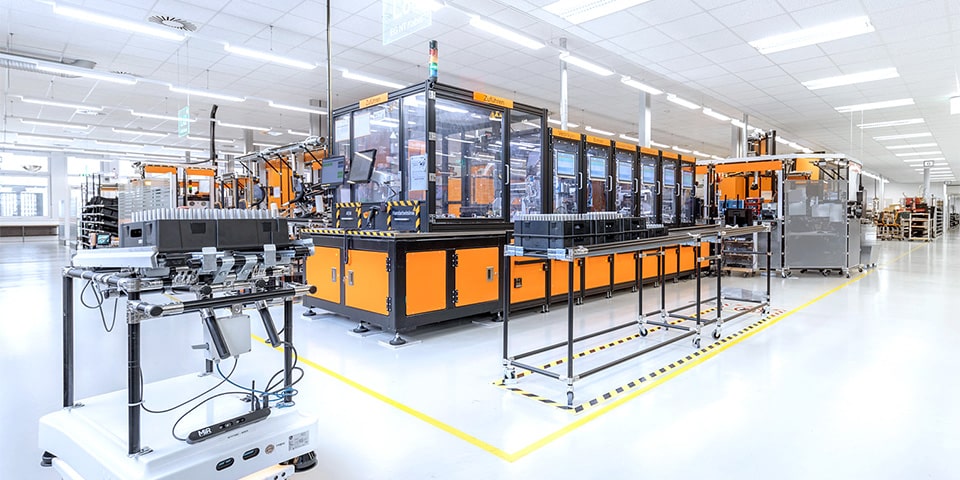
These are going to be unusually exciting times for machine builders and companies betting on automation and digitalisation in production environments. On the one hand, the manufacturing industry in our country is still only at the beginning of the big digitisation wave, so there is solid growth potential. On the other hand, the tight labour market, the chip shortage and further consolidation in quite a few sectors are also putting a lot of pressure on.
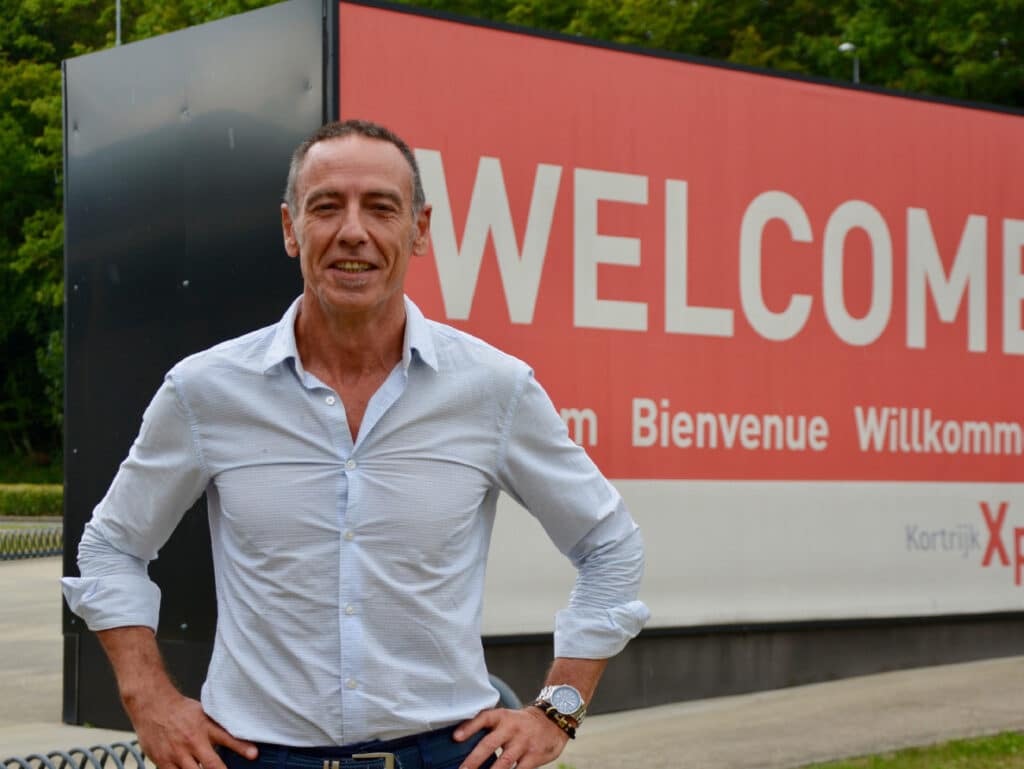
“If we are talking about the somewhat broader manufacturing industry in our country, we have more or less reached a tipping point today,” echoes Alain Wayenberg, Business group leader manufacturing at technology federation Agoria. “Anno 2021, it is no longer unrealistic - apart from the growth of players already established here - to bring new manufacturing companies to Belgium. At the same time, we also see some Belgian manufacturing companies bringing some of their production back home. Sectors such as industrial automation or mechanical engineering can therefore reap the benefits of this in the coming years: there really is catching up going on.”
So while the good news is that there is some growth potential for the sector, there have also been some tough hijackers on the coast in recent months. Besides the general problems with a lot of supply chains - which affected almost all industrial sectors - most high-tech companies also faced an imminent shortage of chips and electronic components. “Looking to the future, this is both a threat and an opportunity,” Wayenberg believes. “Machine builders will also have to continue to reckon with possible delays in the coming months as a result. At the same time, we also see that in Germany, for example, there are now concrete plans on the table to start producing chips themselves.”
Karl D'haveloose, ceo of Invent Media and organiser of a number of leading industry exhibitions in our country, is on the same wavelength. “Most manufacturing companies we are in talks with confirm that they are accelerating their search for more local suppliers in their backyard. But building such a completely new supply chain with local suppliers is far from an obvious story. There are simply too few, and they also tend not to be price-competitive compared to trusted Asian producers. The CEO of ASML, a particularly important builder of chip machines for chipmakers, expects the shortage of circuits to continue until at least the third quarter of 2022. So I fear that the industry will have to wait for some time for a normalised supply of electronic components, while demand is currently very high.”
Wayenberg and D'haveloose are in complete agreement on one thing: we are only at the beginning of the real digital revolution, which will further sharpen a number of already existing challenges for machine builders and other industrial companies in our country. Ranging from ever heavier investments to keep up technologically to the labour market tightness, which is gradually assuming worrying proportions. “Today I already know of companies that could increase their production but are not doing so because they cannot find enough people,” Wayenberg argues. “Digitalisation and robotisation may replace human labour here and there, but at the same time they often also open the door to new business and innovative products, so that companies grow and in time there will be a need for new workers again.”
D'haveloose: “We are really facing an unprecedented scarcity of engineers and workers with the necessary digital skills. Even at operator level, companies are still barely finding people. Large-scale digitisation and automation to optimise human links are therefore the only way to increase productivity
increase.
At the same time, companies will have to rely on external co-creation and co-engineering companies. In the past, strategic engineering and product development happened almost exclusively in-house, so this will also be a solid mental turnaround for a lot of companies.” D'haveloose also points to another side effect of digitisation and automation. “I see increasing pressure for all machine builders to buy up critical suppliers in the supply chain and, where possible, take over colleagues and enter new markets. So take over yourself or get eaten up. Capex and research budgets to keep up technologically are immense. 70% of all research budgets in Belgium are borne by the manufacturing industry, which says it all. Last but not least, given the limited number of operators at end customers and the rising price tag of repairs and interventions, machine builders will also increasingly switch to a MaaS model: Machines as a Service. The machine builder no longer sells only the drill but also the bore. Thanks to this model, the bond with the customer will also intensify, and other revenues will be generated on top of pure machine sales.”
When talking about digitalisation in the sector, digital engineering and, gradually, the deployment of AI in an industrial setting are obviously an essential part of it. “More and more production companies are betting on digital twins,” Wayenberg knows. “This has long since gone beyond digital twins of the products themselves, but now also of the integral production process. For machine builders and companies engaged in industrial automation, this will undoubtedly become an important growth area in the long run. After all, an ordinary robot should soon become a smart, self-learning robot, and finaly an entire factory may even become a smart factory. All kinds of sensors, smart camera systems and operator-supporting software that also banish paper from the shop floor as much as possible will play a key role in this. Parallel to this trend, we see that AI is now also quietly on the verge of the big breakthrough in production environments: machines are optimised as much as possible based on available and preferably also as structured data as possible. This allows you as a company to start analysing your production processes much better and then also optimise them.”
This all sounds very promising, but Wayenberg also nuances. “We note that today companies are still mainly looking at how they can use the available data in the best possible way. Some players are already pretty far along in this, but the road is still very long, especially for SMEs.” Moreover, a not unimportant side note fits this trend. If we eventually evolve towards production environments that are fully integrated into the wider IT world, the security aspect will of course gain solid importance. Wayenberg: “Production companies will have to move up a gear in this respect: it's not just about the technological security of machines and software, people and the mentality on the work floor will also have to evolve. Until recently, passwords to operate machines were not exactly common in a production environment. But anno 2021, a cyberattack could bring your company to the brink of bankruptcy, and for suppliers, cybersecurity will therefore become an increasingly important concern. They will have to build security into their new products.”