nexttech.be
en

The knowledge platform for technology, innovation and digital transformation
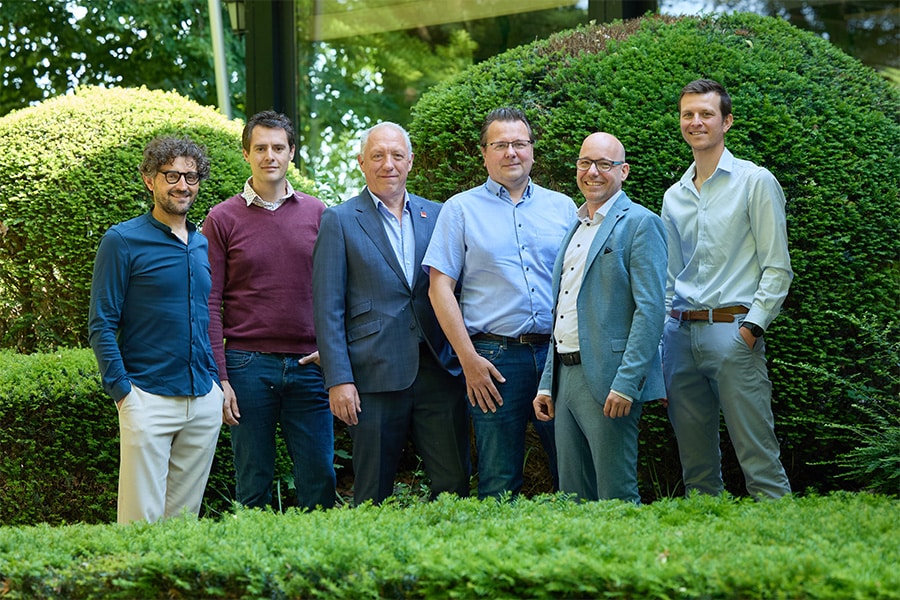
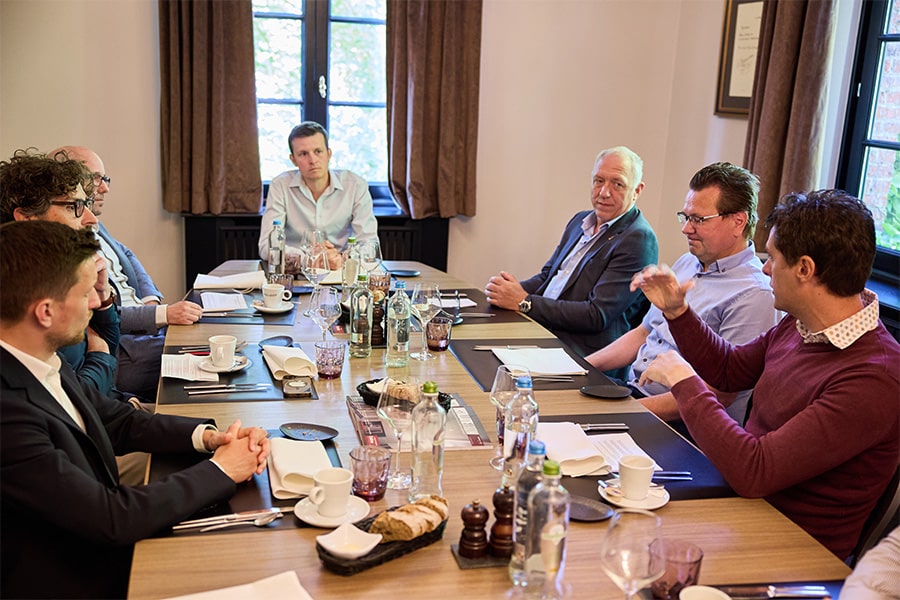
Smart buildings are the talk of the town in the construction and installation sector these days. However, it is not always easy to see the wood for the trees. Where does connected end and smart begin? Can most new buildings rightly be called smart, or is there untapped potential? And what is the impact of new European legislation and the rise of AI on the ‘smart transition’ that is currently underway? Installation & Construction brought together five experts to provide smart and well-founded answers to these and other pressing questions.
Participants
Paul van Hinsberg, Managing Director at B.E.G. Belgium
Philippe Kygnée, Sales Manager at WAGO BeLux
Alexander Hermans, Account Manager at Beckhoff Automation Belgium
Kristof Van Gorp, Home & Building Specialist at Rexel Belgium
Johan Vercammen, Product Manager at Wygwam, a division of Niko NV
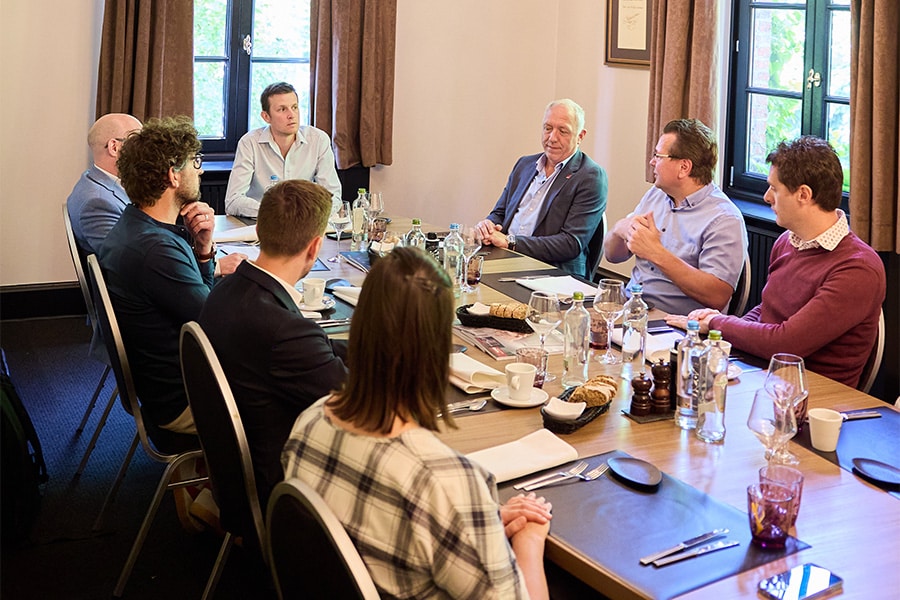
Good afternoon gentlemen, thank you for coming. Could you first explain how your companies contribute to the realisation of smart buildings?
Paul van Hinsberg: “B.E.G. Luxomat is known as a developer of motion and presence sensors. From there, we are taking the step towards automating mainly tertiary buildings, where we can control various technologies (lighting, HVAC, sun blinds, etc.).”
Johan Vercammen: “At Niko, we started with the first version of a smart home solution about thirty years ago. Whereas the focus was initially on individual products and functions, we have gradually evolved towards a fully smart and open platform, taking into account the latest technologies and trends, for which a separate division has been created with Wygwam.”
Kristof Van Gorp: “As a wholesaler, Rexel strives to inform installers about the various options we offer in the field of smart home and building systems. We don't just focus on control systems, but also on building infrastructure (HVAC, distribution boards, IT rooms, etc.).”
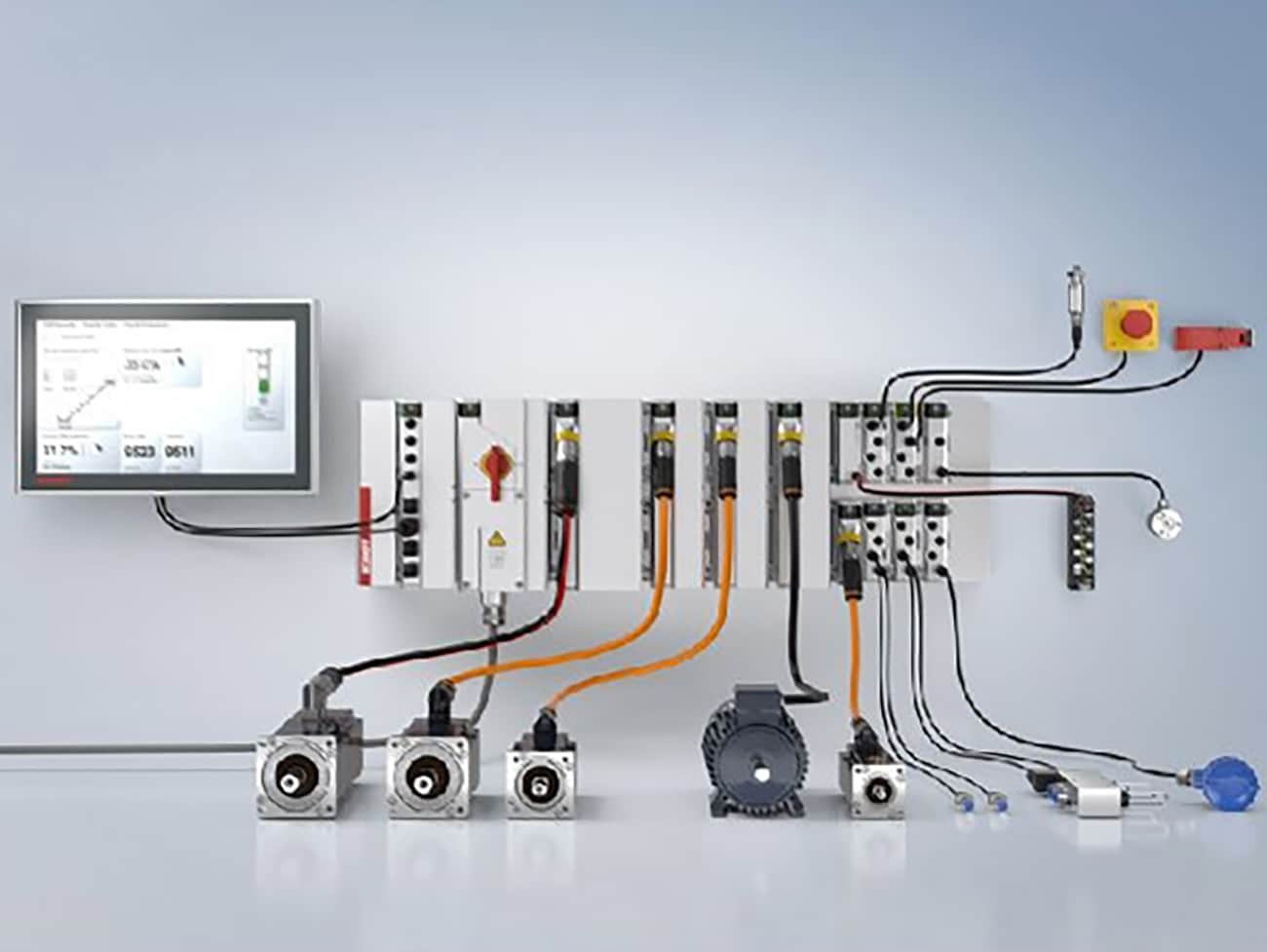
Alexander Hermans: “Beckhoff Automation distributes hardware and software solutions for various types of buildings. The aim is to make them smarter and enable all connected systems to work together seamlessly.”
Philippe Kygnée: “WAGO is a manufacturer of both interconnection and automation solutions. With our building automation solution, we are mainly active in the tertiary and industrial markets. We ensure that all building technologies (HVAC, electricity, lighting, sun blinds, charging stations, energy supply, etc.) can communicate with each other, including the higher-level control system and any connection to the cloud.”

In your opinion, what conditions must a building meet in order to qualify for the label ‘smart building’?
Kristof Van Gorp: “An essential condition for claiming the label ‘smart’ is that different technologies and their operation are coordinated with each other. It is important that there are common components that can combine certain controls.”
Johan Vercammen: “In addition to linking technologies, there must also be interaction with the user, whose behaviour and wishes must be responded to optimally. And this must be done consistently, through perfect calibration.”
Paul van Hinsberg: “For the time being, this is easier to achieve in a residential context than in tertiary buildings. At the moment, these are still more connected than smart, as work is still being done in separate silos. This obviously makes the seamless integration of various technologies a lot less straightforward. Fortunately, we are seeing an increase in smart applications, such as automatic controls based on motion and presence detection. The transition to smart has therefore begun, but we are not there yet.”
Alexander Hermans: “It is important to create synergy between different technologies in order to maximise both energy efficiency and end-user comfort, particularly through the implementation of user- and maintenance-friendly platforms that use open standards. The overarching control system acts as an interpreter, translating all the different open standards into a series of data. Based on this, a programmer can efficiently link the technologies together so that they are more than the sum of their parts.”
Philippe Kygnée: “That's right. On top of the connection and communication aspects, the automation shell must ensure that both energy and comfort objectives are achieved. And preferably without the user noticing too much, especially in tertiary buildings. Incidentally, the new European legislation requires us to go a step further in this regard.”

You are referring to the EPBD IV regulations, which more and more companies will have to comply with from 2026 onwards. What will be the impact of this?
Paul van Hinsberg: “That all new tertiary buildings, without exception, will have to be smart. And that manufacturers will have to work with open, standardised protocols, whether they like it or not. There will always be companies that continue to write their own software, but closed protocols will no longer be an option. This is a very good thing, because that is partly what distinguishes connected from smart.”
Alexander Hermans: “Thanks to these open standards, any problems can be quickly resolved without having to rely on the party that originally installed everything. The new European legislation may also mean that investors who previously tended to keep all technologies as cheap as possible will have to respond more to the needs and wishes of end users in order to keep their projects attractive.”
Philippe Kygnée: “Indeed, purely energy-related measures such as better insulation will no longer be sufficient for property developers to bring a building into compliance. The integration of technology – with all the functional requirements that entails – will become an absolute must. There will be no way around it.”
Kristof Van Gorp: “For installers, integrating new technologies into existing installations will be quite a challenge. Apart from that, other players are also entering the picture who may not necessarily be familiar with the technologies, but who do know the standards. They can use the data provided in the building operating system to enhance the user experience, without having to know how everything works technically.”
The European directives do not apply to the smaller residential market. Will smart buildings eventually become the norm there too?
Johan Vercammen: “Definitely. We are already seeing some movement in that direction, although there is not much standardisation at the moment. So the question is how to get all these different ‘connected’ systems to work together in a simple, user-friendly way. It's an issue that many integrators are grappling with today. Local collaborations between electricians and heating specialists are also among the possibilities. And we are also doing our bit by helping installers and end users to integrate different technologies. In any case, smart home solutions are currently on the rise, partly due to innovative technologies (PV installations, heat pump systems, charging infrastructure for electric vehicles, etc.) and the associated legal obligations. Think, for example, of a smart charging station and air conditioning system that are linked to a PV installation with a battery, so that they are powered as much as possible by green electricity.”
Kristof Van Gorp: “I get a lot of questions from installers about these kinds of smart applications. Due to the persistent fragmentation in the residential segment, they are constantly searching for suitable integration concepts, but little by little, more structure is emerging. Thinking in terms of general interconnectivity is also becoming the new standard in the residential segment, although smart control of all these technologies is unfortunately still often lacking. The fact that users can monitor certain technical data via an app does not, of course, mean that everything is functioning optimally. The possibilities are there, but it will take some time to put them into practice. Often it is simply a matter of a lack of budget and/or knowledge.”
Philippe Kygnée: “Make no mistake: even in the tertiary sector, there are still areas where standardisation is virtually non-existent. Charging stations are a good example of this. There are many different solutions available and everyone pretty much does their own thing. It is high time to streamline this. The same applies to new wireless technologies, which are very useful in the context of revamping, but which many manufacturers use in a closed manner. As long as there is no body committed to testing procedures and regularisation (as with DALI, BACnet, KNX, etc.), this can lead to problems in terms of communication and integration. And so, in that respect, it is always a matter of customisation, which of course costs more time and money.”
Alexander Hermans: “What you sometimes see is that manufacturers use a certain standard, but at the same time employ a kind of proprietary dialect to keep everything somewhat internal. This makes it difficult to enable certain other technologies to communicate with their application.”
Philippe Kygnée: “While they do, of course, label it as an ‘open protocol’, in reality they create a grey area. You see this with many new technologies, with the aim of maximising the return on investment. DALI has also been subject to this for a long time. It is only since the arrival of DALI-2 that there has been complete standardisation. The result: a fantastic solution that allows you to easily switch between different components.”
Can most new buildings already be rightly called smart? Or is there still a great deal of untapped potential?
Paul van Hinsberg: “There are regional differences in the tertiary segment. Brussels is leading the way. Everything that is currently being realised there – often older office buildings that are undergoing a thorough update and/or repurposing – can be labelled ‘smart’.”
Philippe Kygnée: “But how smart is smart, really? In the Belgian property market, it remains difficult to think long term. Project developers tend to look at the cost per square metre rather than the total cost of ownership. They are much less interested in the fact that there is a lot to be gained from smart technical management after installation. That is why we are fans of total projects that also include a maintenance contract, because then more attention is automatically paid to the quality and return on investment of the technical infrastructure. It is the task of the engineering firms to describe this clearly in their specifications. After all, that is where it all starts.”
Alexander Hermans: “Indeed. In that respect, it is a good thing that the parties responsible for integrating the technologies are coming to the table at an increasingly early stage. In other words, when engineering firms are drawing up the specifications. This is to see how they can make new buildings future-proof, so that maintenance is still easy to carry out years later and any new technical innovations in the future can be easily implemented.”
Kristof Van Gorp: “It is also up to us to inform large and small installers who are not yet very familiar with the subject matter. That is why, in projects that I supervise, I always ask about the possibilities in terms of communication, connectivity and integration. And then you often see that certain technologies are replaced by other systems that work on the same standard, creating valuable synergy.”
Philippe Kygnée: “In projects where the client remains the owner, smart building applications are much more obvious. Industrial players are definitely willing to invest in them, as they naturally reap the benefits themselves. Energy monitoring, smart control...: everything they implement pays for itself many times over, in the best case scenario even very quickly.
short term.”
Alexander Hermans: “The advantages of this go far beyond automating certain scenarios and detecting and remedying potential losses. Consider predictive maintenance, which makes it possible to predict when certain parts are likely to fail. By responding proactively, companies can avoid downtime and thus boost their overall return on investment.”
How can we motivate property developers to opt for smart building applications?
Paul van Hinsberg: “The new European legislation will certainly make a significant difference in that regard. Until now, many property developers have focused primarily on the BREEAM score and delivered shell buildings that were smart in theory, but where the smart facilities were not used in practice or were not even properly connected – as we recently experienced ourselves when we moved to our new office. If they want to continue to sell and let their projects, they will have to raise the bar from now on, in particular by opting for high-performance technologies, smart control and monitoring systems that stand the test of time.
can endure.”
Philippe Kygnée: “I wonder how many SME projects there are where a lot of money has been paid for a nice installation that does not work properly. When you consider how many problems we detected in the existing installation during the renovation of our own office building, I feel sorry for all those companies that – unlike WAGO – do not have the necessary in-house expertise to collect the right data and control everything from A to Z themselves.”
Kristof Van Gorp: “That's why it's a good idea for such companies to have their installations regularly subjected to a thorough audit by a specialist firm. The latter can then demonstrate in black and white which areas may be problematic. Better control of a heat pump can already make a big difference to the energy bill. This is an excellent way to ensure that buildings function efficiently – on top of the usual building management – and that smart building applications deliver optimal returns.”
Alexander Hermans: “Identifying problems is one thing, but solving them is obviously another matter entirely. Technical engineers also need to keep up with this digital (r)evolution. One of the major focus areas for the near future is therefore to provide further training for such profiles, who often still have too little insight into the underlying technicality and complexity of contemporary installations. We can start designing and realising smart buildings on a massive scale, but afterwards it is of course also important to maintain them adequately. We must certainly not overlook this in the context of that smart transition.”
Philippe Kygnée: “Another important challenge is the Cyber Resilience Act, which now imposes much stricter requirements in terms of cyber security. Manufacturers, integrators and end customers: everyone shares responsibility for this. This requires a considerable effort and investment from all parties involved. And that also makes it somewhat more complex to get different systems to work together now that all protocols are strictly secured (BACnet Secure Connect, KNX Secure, etc.), not to mention the additional complexity at the infrastructural level.”
Is the role of installers evolving due to the rise of smart buildings?
Paul van Hinsberg: “I am convinced of that. In the past, installers were purely executors. Today, they are broadening their knowledge and helping to lay the foundations for fully-fledged smart buildings. In the tertiary market, most integrators have now been incorporated into large installation companies, which try to acquire all the know-how needed to make a building smart in-house. This means that building owners are no longer dependent on different parties – installers, programmers, software suppliers, etc. – and have a single point of contact, which is a huge advantage given the technical complexity of smart building projects.”
Kristof Van Gorp: “Such ‘total installers’ can be called in from start to finish and also provide the necessary after-sales service. I think that's a good thing in itself. You will always need contractors, but we are also seeing new profiles emerging. Think, for example, of an energy consultant in residential construction who knows how to coordinate different technologies.”
Johan Vercammen: “Certainly, the various technologies require additional knowledge to make them work together. In the near future, the various types of installers will work closely with the technical experts who design a home or take care of the programming and configuration. And as Paul already mentioned, they will often even be part of the same installation company.”
Philippe Kygnée: “In itself, that is a serious challenge, because everything is organised according to different disciplines (HVAC, electricity, energy supply, etc.) and engineering firms base their specifications on this. It therefore takes a considerable effort to transcend these traditional boundaries. In addition, more and more is expected of a building, including flexibility with a view to the future. Companies that ensure that the technology they install is easy to reprogram and reconfigure, with adjustments being immediately transferred to the higher-level system, will always have an advantage. In any case, the more you can streamline technical management, the more building owners, facility managers and users will be open to smart building applications.”
What is the potential of AI in this context? Is it already being used effectively in smart building solutions?
Philippe Kygnée: “Absolutely. For large tertiary buildings, the trend is towards a kind of digital twin that – whether or not via a third-party company – optimises all processes and set points based on the available data.”
Alexander Hermans: “There are already many research institutes that are experimenting with this extensively. The data is there, so if you apply the right tools to it, you can anticipate and respond to certain issues very quickly and accurately. The possibilities are endless.”
Johan Vercammen: “When it comes to AI, many people spontaneously think of complex applications and calculations, but it can also start very simply. Think of predicting the ideal times to charge an electric car based on energy flows and user behaviour. In terms of data reporting and analysis, you can apply a huge amount of smart solutions with the help of AI.”
Philippe Kygnée: “However, AI is a buzzword that is used not only appropriately, but sometimes inappropriately these days. Heating a building based on occupancy rates and outside temperature does not require artificial intelligence, yet it is often automatically classified as such. AI undoubtedly has a huge future, but we are still looking for ways to use it optimally.”
Finally, which building, project or solution perfectly reflects what a smart building is or should be in your opinion?
Kristof Van Gorp: “A great solution that we recently contributed to in our supporting role is a hotel application on a KNX structure, in which the HVAC is linked to guest room management.”
Alexander Hermans: “The ZIN project in Brussels is a striking example. That circular building has been made completely smart by our installation partner VMA using our hardware. We are quite proud of that. EnergyVille in Thor Park in Genk is also conducting all kinds of research into smart building applications.”
Paul van Hinsberg: “In Brussels, most new or renovated office buildings are smart-ready. Some good examples of this are OXY, Brucity, Frame and M10.”
Johan Vercammen: “The Van der Valk Hotel in Beveren opted for Niko Home Control as part of its renovation. The smart technology was integrated into 130 rooms and various suites to offer guests greater comfort and enable staff to work more efficiently.”
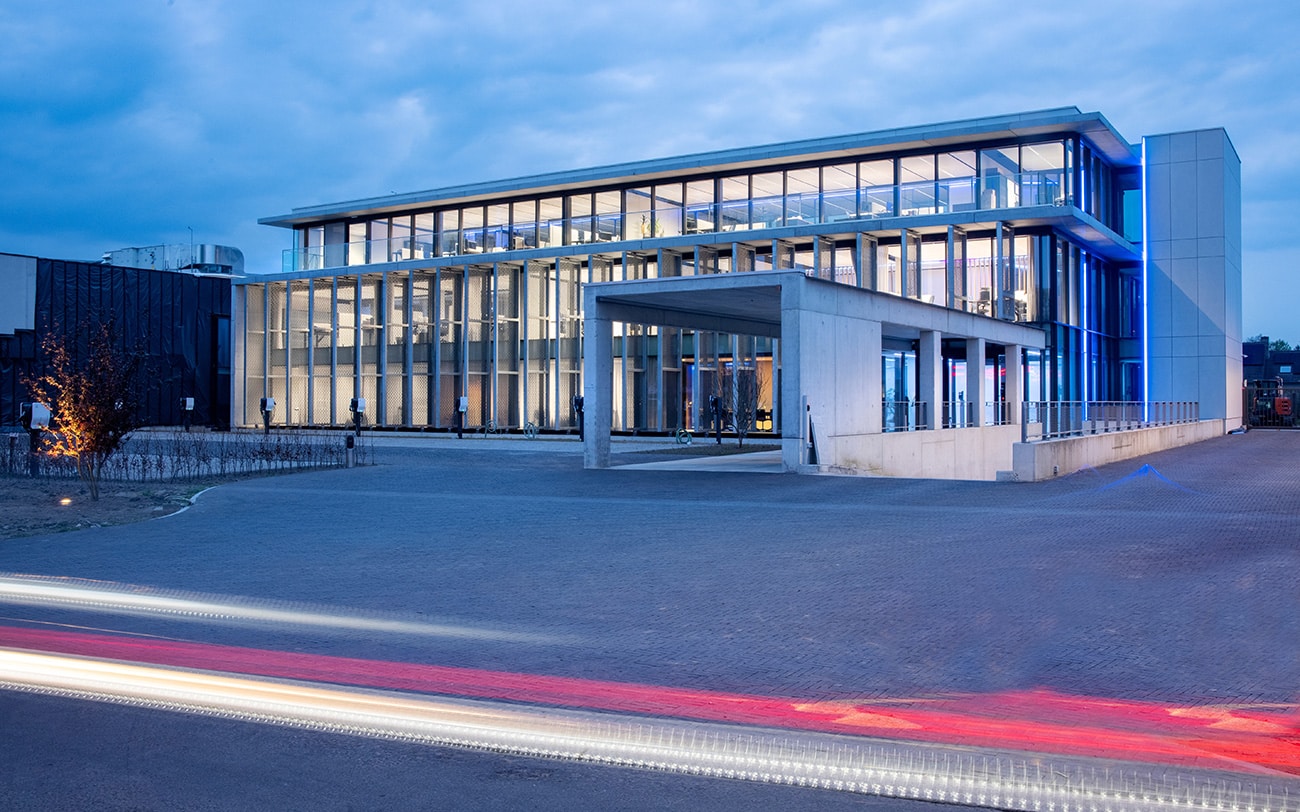
Philippe Kygnée: “In our own building, everything is automated from A to Z: HVAC, electricity, heat pumps, charging stations, access control, the overarching SCADA system... So it's really a showcase of what we can do. In principle, we can realise any smart building solution you can think of, but it must of course remain manageable. That will be the big challenge for the future: despite the increasing demands and the associated extra complexity, keeping it sufficiently accessible for installers and users. After all, it is in practice that the many advantages of smart buildings must be realised...”