nexttech.be
en

The knowledge platform for technology, innovation and digital transformation

A machine upgrade often starts with the electrical or control systems aspects. However, such an upgrade is the perfect opportunity to also review the digital possibilities. In particular, data and connectivity. But digitalisation is central to your business as a whole, not just at the machine level. So what should you prioritise at machine level during the upgrade phase? These five guidelines will show you the way.
Without connectivity, there can be no digitalisation.
Open protocols are the best way to facilitate the interconnection of everything.
Here is a summary of some of the key features of OPC UA:
In addition to open connectivity, you can already incorporate the following features into the machine control system:
Machine vision is developing at a tremendous pace. Where automation used to be impossible or unthinkable, new possibilities are now emerging. Even if there is a great deal of variation and flexibility in your processes.
Machine vision is used in a wide range of applications:

Deep learning adds a new dimension to machine vision. Although the concepts of deep learning and AI are not new, they are now being widely applied in machine vision systems.
The razor-sharp images produced by machine vision make deep learning more relevant and applicable than ever before. The better the camera captures every detail, the more effectively deep learning can fulfil its role. Think of damage detection, for example in fruit growing, or identifying damage in plastics and metals.
Partly thanks to advances in faster computer hardware, the necessary intelligence is now available to implement deep learning technology in any modern production facility. This will enable us to realise its potential even more efficiently and effectively, and to establish new business models.
Would you like to find out more about the new possibilities offered by machine vision combined with deep learning? Discover them in the article When traditional visualisation techniques fall short.

The transition to Industry 4.0 means that all machines are becoming increasingly interconnected. Production departments are increasingly required to communicate with ERP systems, and information needs to be transferred to the cloud, …
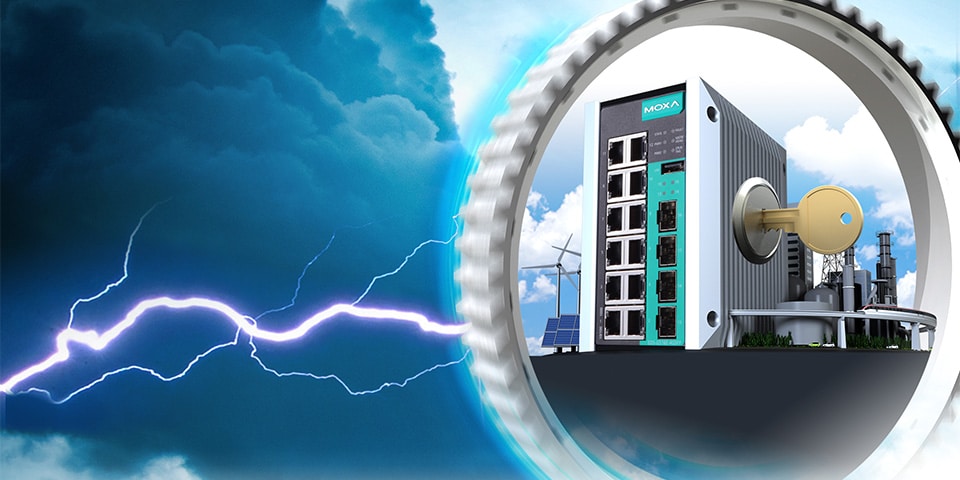
These additional connections ensure that all data can be exchanged smoothly. However, they also pose a significant risk.
IT security has now been firmly established for many years, but OT security is currently still in its infancy. This often leads to situations where the connection to the public internet is heavily secured by the IT department. However, once inside the local network, there are often no security measures in place. This means that all systems on the network can communicate with one another without restriction, resulting in the associated cybersecurity risks.
The aim of cybersecurity can be divided into three distinct pillars:
OT cybersecurity is a relatively new concept. This means that many existing systems are not suitable for direct connection to large networks, let alone for direct connection to the internet. With these systems, you must therefore pay particular attention to establishing a secure network perimeter using, for example, firewalls.
A second major challenge is the mismatch between the requirements of IT and OT.
Cybersecurity is a crucial requirement for both, but priorities are often ranked differently. For IT, confidentiality is the most important factor, followed by integrity and availability. In OT, the order is completely reversed, with availability being the most important consideration, followed by integrity and confidentiality. After all, in IT it is relatively easy, for example, to restart a server, application or similar outside working hours in order to carry out an update. In OT, however, it is often not straightforward to halt production, or a network problem may arise.
In our white paper Machine Upgrading 4.0 We will take a closer look at the aspect of machine security and the role played by the IEC 62443 standard in this regard. In addition, we will discuss not only the digital aspects but also the electrical, mechanical and conformity aspects of a machine upgrade.