nexttech.be
en

The knowledge platform for technology, innovation and digital transformation
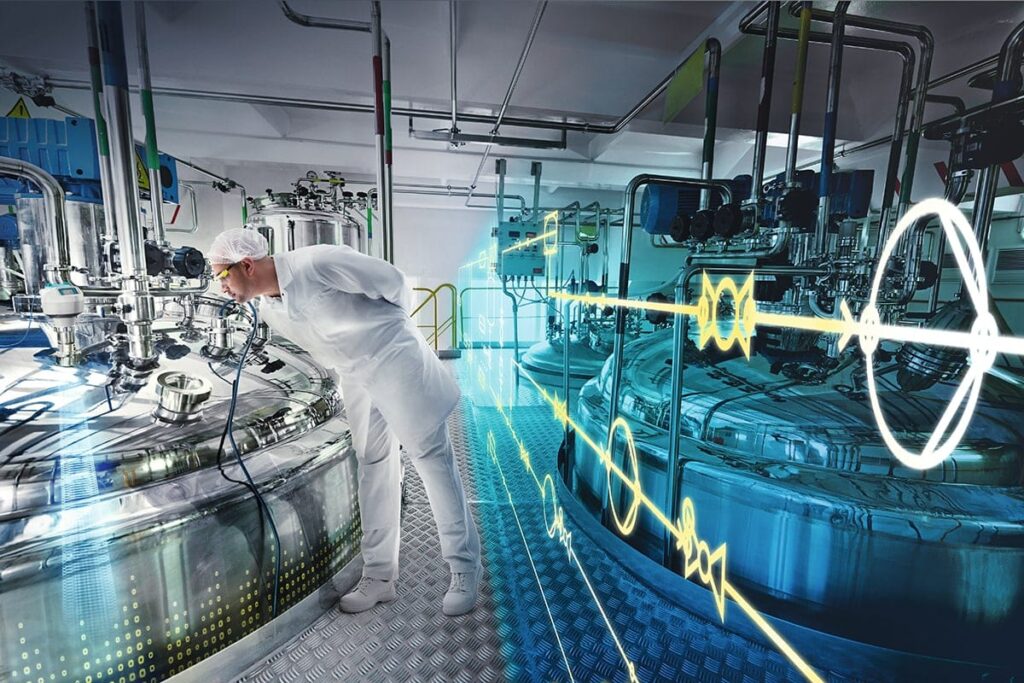
To build on their competitive position, machine builders need, more than ever, to innovate. Whereas in the past they could rely on expertise within their own organisation, increasingly complex technology now requires cooperation within ecosystems. The breadth of its technology offering combined with experts seasoned in both products and applications makes Siemens a key pivot in this ecosystem. A conversation with head of sales OEM and business segment manager Machine Tools Nick Vanden Broecke, and head of Siemens Digital Industries Belgium-Luxembourg Thierry Van Eeckhout, on how bringing together the real with the virtual world can accelerate innovation.
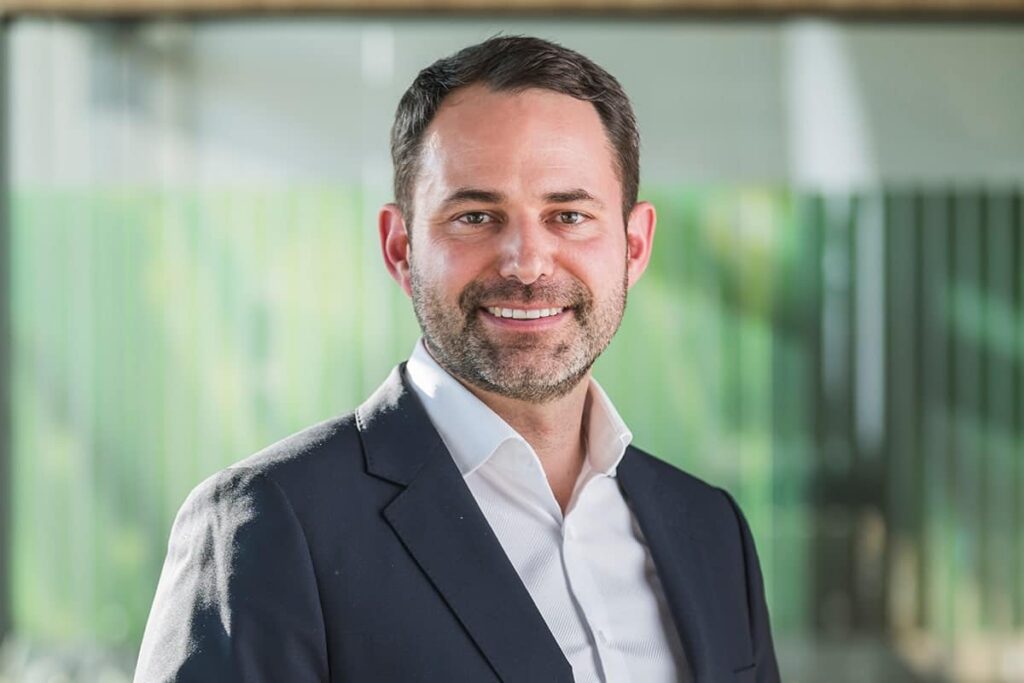
The scarcity of technically skilled personnel is forcing the entire western European manufacturing industry to automate, whether you make biscuits or build machinery. “At the same time, we see that automation has become a lot more complex. It is no longer enough to deliver the largest output at the highest speed. You now also have to switch flexibly between series, take cyber threats into account, make efforts to become more sustainable, comply with the new rules on machine safety, add software to monitor the machine during its entire lifespan... This requires specialised knowledge. It is virtually impossible to have all that knowledge in-house. We therefore see more and more ecosystems emerging in the machine building market,” Vanden Broecke opens.
The proprietary IP, of course, remains at the heart of the machine. “That is also where machine builders remain lord and master. But that does not mean they cannot find support to take the next steps. Belgium is blessed with a strong fabric of knowledge centres and research institutes. These can help validate innovations in IP faster with fundamental research. Because ultimately, you want to get a new machine to market as quickly as possible,” adds Van Eeckhout. Academia can also play a role in this. “Our job is to engineer everything around that with the customer as competitively as possible. In the past, the customer gave us a bill of materials to do this; a parts list. Today, we think with him how to do that in the best way, how to arrive at the best machine and how to fit it into a bigger picture, connectivity and cyber security included. So that is our ambition for the future, to be part of the full flow of the machine builder.”
Looking up, cataloguing, pricing and labelling: for second-hand bookshops, sorting books quickly becomes a day-long task. Valvan's Automated Book Processing machine (ABP) automates the entire process. The biggest challenge was centralising all the different data flows within the ABP machine and controlling the different parts. An ET 200SP Open Controller from Siemens forms the heart of the installation: it receives data about the book (price, genre, location label, sorting position) from the vision computer and transmits it to the printer and robot. The ET 200SP Open Controller also tracks each book through the installation, ensuring it is sorted to the correct position. A third challenge was the SCARA robot. Thanks to the 3D camera constantly scanning the height and vertices of the objects on the belt, the robot rotates with the position of the book and sticks the label in the right place - in three dimensions. Thanks to AI, the machine works even faster. The space between two books on the belt can vary. An intelligent infeed model on a digital twin of the machine, which is getting smarter all the time, allows the belt to rotate faster between two consecutive books. That model also runs on the ET 200SP Open Controller. “The choice of Siemens was logical for us because we work together for all our machines. The capabilities are second to none and their products are available for a long time,” said Ruben Forceville, automation engineer at Valvan.
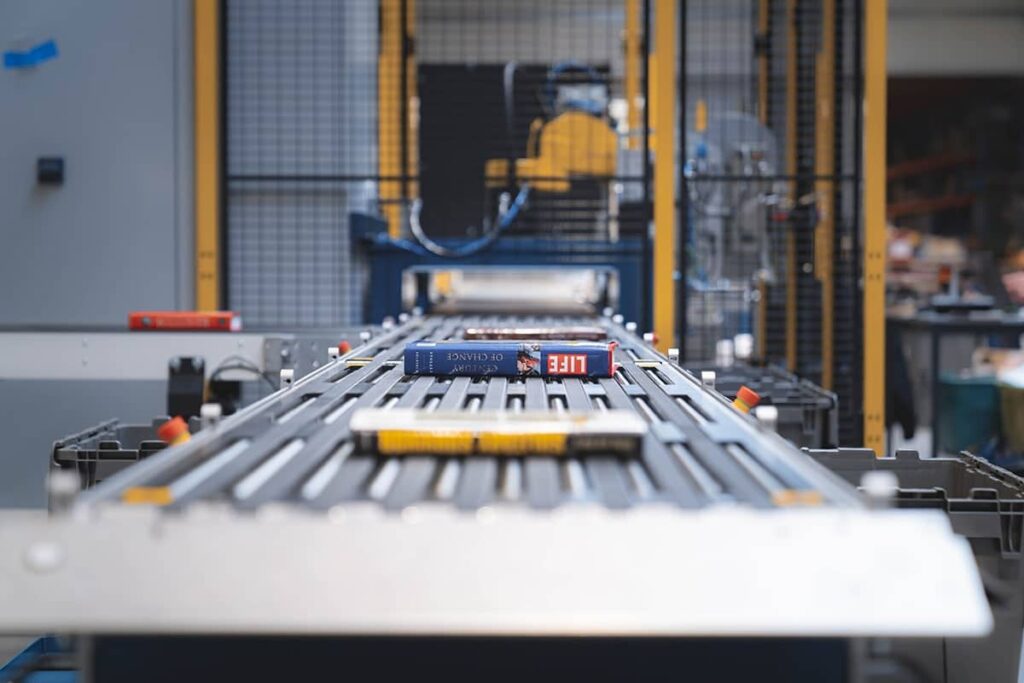
Looking up, cataloguing, pricing and labelling second-hand books. Valvan's Automated Book Processing machine (ABP) automates the entire process.
This does require a very different approach. The fact that Siemens has the widest range of hardware, software and services on the market is invaluable in this story, according to Vanden Broecke. “You still need specialists who master the technology to perfection. Who know the countless little tips & tricks to make it work perfectly in an application. We have those. But you also need a team that gets to grips with customers” lifestyles. Who know how those machines should eventually work, otherwise you will never get everything seamlessly integrated. We have those too.“ For Siemens” own employees, lifelong learning is therefore the credo. It has also been inspiring the next generations of engineers with its Siemens Industry Academy for more than six years. "By having them work together with our partners around innovative projects, so that they choose a career in industry."
A lot of these innovative projects today work with digital twins. “Because you can make incredible gains by bringing the real and virtual worlds together on one platform,” Van Eeckhout explains. “A lot depends on innovation projects for machine builders. If they fail, in extreme cases it can mean bankruptcy, because so much budget has already crept into it. But with the technology out there, machine builders can simulate and virtually validate new developments first, without having to build dozens of prototypes of the machine. This is more sustainable because you have no waste, you work much faster to innovate and there are fewer risks involved. And it also allows you to continue monitoring the machine afterwards throughout its lifetime, for OEE, predictive maintenance ... you name it.”
A tailor-made box for every e-commerce product: the X7 by machine builder Avercon revolutionises packaging. Siemens technology could not be missing. In traditional industry, boxes are made to fit perfectly around a specific product. In e-commerce, the batch size is reduced to one: each product has a different size. Moreover, each product has to be given a unique label. Avercon designed an adjustable machine that automatically switches from product A to product B with different dimensions. To gain visibility into a complex process and verify that the components Avercon had drawn actually did what they were supposed to do, digital twin technology was indispensable. “There are at least 50 servomotors in a machine like this: each movement has to be exactly in time for the next one. By working with a digital twin, we could easily visualise that whole process,” says David Provoost, sales & marketing manager at Avercon. The machine can now prepare, pack, label and ship an individual parcel in 3.5 seconds. It thus does 30% faster than similar systems and is eight to 10 times faster than a human. Products are now packed up to 40% more efficiently, saving the customer more than 20% on transport costs.
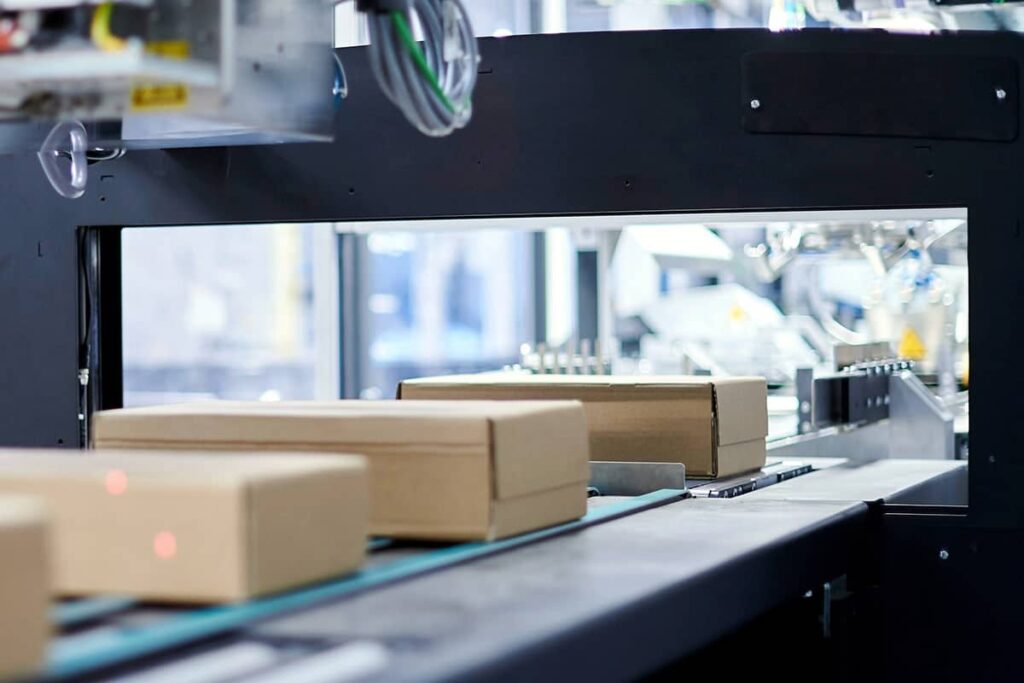
A tailor-made box for every e-commerce product: the X7 from machine builder Avercon revolutionises packaging.
A second technology trend is artificial intelligence. Vanden Broecke: “Operators used to know what was going on by the sound the machine made. That kind of knowledge is disappearing. You now have to introduce other ways to communicate and interact with your machines. Our Siemens Industrial Copilot uses generative AI to do this. The machine now tells itself what its status is and what the possible causes of problems are. This offers huge potential for faster fault diagnosis, training of operators or maintenance technicians and optimisation of machine processes. The technology is ready for automation. It is still a matter of building trust. People are allowed to make mistakes, machines are not. But we already see AI as an enabler of innovation and, by sharing our experience, we want to keep the threshold for machine builders as low as possible.”
Data will therefore be indispensable. According to Vanden Broecke and Van Eeckhout, this realisation is now ingrained in machine builders. “A lot of data is already being generated, but the question is what percentage of it we are already using. Every machine builder needs and is working on a data strategy. It is up to us to make sure that the tooling to work with that data becomes easier and easier. That they can take the next steps to standardise machines, generate and simulate programming code and deliver their machines virtually,” both gentlemen conclude.
Harvesting mushrooms is very labour-intensive and difficult to automate. That is why TLT Automation took a different approach. They separated picking and sorting. The solution works: in the new system, pickers pick up to 90 kg of mushrooms per hour, compared to 30 kg before. Three times as efficient, but each picker now also needs a sorter. Automating the sorting process was therefore the next step. To do this, a delta picker takes a picture of each individual mushroom and decides where it should end up. TLT Automation wrote the algorithm itself, and for the control it worked with Siemens to calculate the mathematical kinematic transformations. The robots must move perfectly with the conveyor belt. With MCD and a SIMIT Digital Twin, TLT Automation was able to test the kinematic transformations before building the mechanical part. Faster and without risk of damage due to calculation errors. Managing director Jan-Emiel Tack: “Because the ‘intelligence’ is in an open ecosystem from Siemens, this solution is easily scalable to other sizes if our customers have other requirements.” The result? Efficiency has now truly tripled. Challenges remain. Can we automatically lid the boxes? Will this eventually work with cardboard boxes? Thanks to the openness of the Siemens ecosystem, we can experiment with this to our hearts” content."
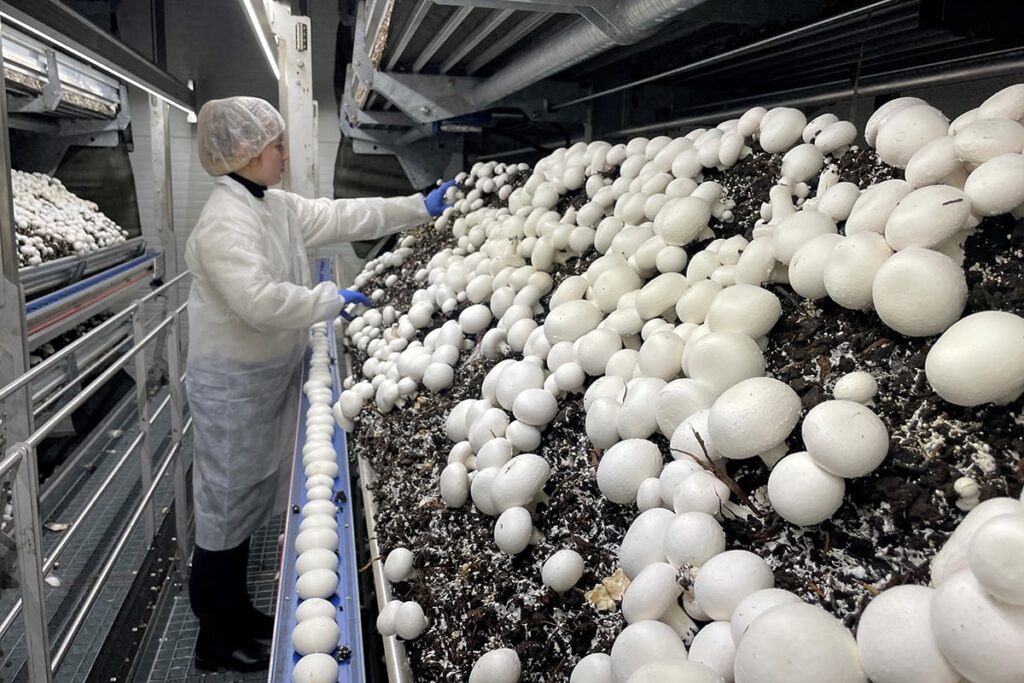
TLT Automation separated picking and sorting. In the new system, pickers pick up to 90 kg of mushrooms per hour, compared to 30 kg before.