nexttech.be
en

The knowledge platform for technology, innovation and digital transformation
“We are not blind to societal concerns”
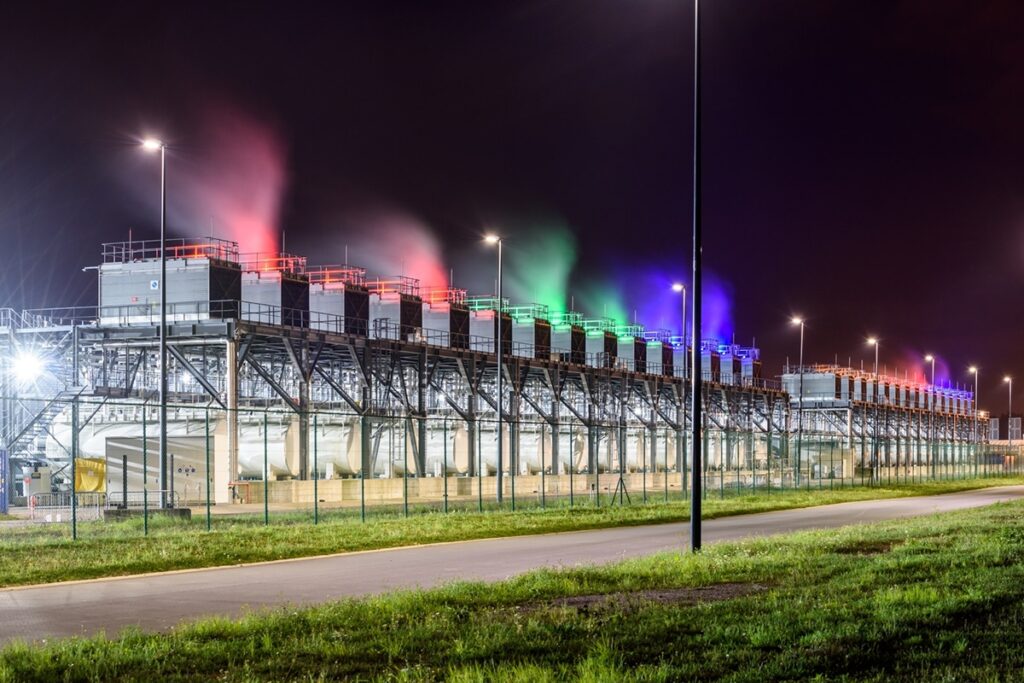
The exponential growth of AI is also literally changing our living environment, as more and more data centres are being built in Belgium. These large-scale IT infrastructure facilities are needed to keep up with the increasing demand for data storage. At the same time, they require a lot of energy. This sector is therefore investing in sustainability. “Actually, our sector is mainly challenged to become more transparent,” he says.”
The rapidly increasing demand for data centres in Belgium is a direct consequence of the explosive growth of AI and cloud applications. Belgium's central location in Europe is thereby leading to increasing interest from abroad. For example, Google is building a new data centre in Farciennes, Wallonia, and Microsoft is also planning a further expansion of three centres in the Brussels outskirts. “In 2024, we realised a 10 per cent growth in IT power for all Belgian data centres combined. For 2025, we expect a growth of no less than 50 per cent in storage capacity,” clarifies Carole Santens, Managing Director of the Belgian Digital Infrastructure Association (BDIA).
That our country is considered interesting for these large-scale investments is mainly due to the available energy capacity. In the traditional hotspots for data centres - Dublin, London, Amsterdam, Frankfurt - they have led to congestion on the grid. That is why Amsterdam recently decided that no new licence applications for data centres should be submitted until 2035. “As the demand for new capacity does continue to grow strongly, we as an association are therefore getting more and more questions about the Belgian market,” Santens said.
Regardless, this evolution will have a major impact on our country's energy demand in the coming years. For instance, according to a recent report by Boston Consulting Group (BCG), Belgian data centres will consume up to five times more electricity by 2035. Besides energy, data centres also consume a lot of water for cooling equipment. The International Energy Agency estimates the global water consumption of data centres at around 560 billion litres of water per year. As a result of the tech giants' AI race, they even expect that consumption to double by 2030.

Globally, concerns are therefore growing about the climate impact of data centre growth. The sector itself points out that massive investments are being made in sustainability and that the results are already evident, especially in Europe and Belgium. “New projects are designed according to the strictest standards,” echoes Carole Santens. This means: as efficient and therefore energy-efficient as possible, including in terms of water, and with reuse of the residual heat produced.
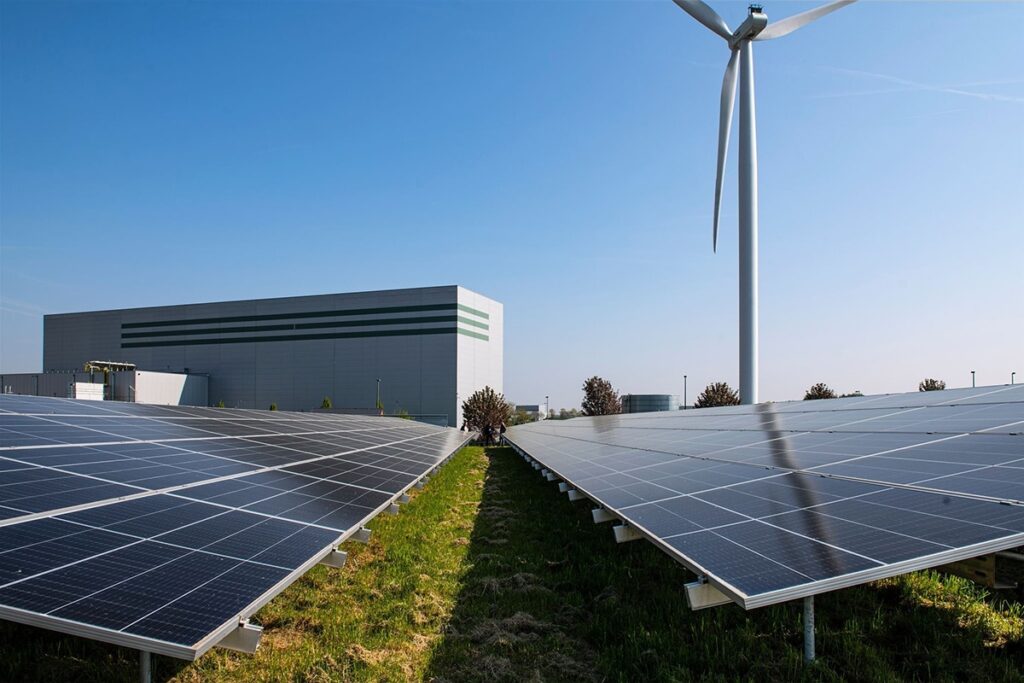
“Sustainability is fully integrated into our strategy,” confirms Laurens van Reijen, CEO of Belgian data centre group LCL. “For example, we invested in three of our own wind turbines and 9,300 solar panels. We do not limit ourselves to solar panels only on-site. For four of our five data centres, we do not use water from the environment, as we rely on air cooling and closed water circuits. In time, our fifth facility will also be adapted in this way. Our focus on sustainability is a very important argument for our customers to partner with us.”
A similar story resonates with Google. “In 2024, Google's data centres provided over six times more computing power per unit of electricity than five years ago,” states spokesperson Michiel Sallaets. “Despite increasing energy demand, Google's total energy emissions were reduced by 12 per cent globally by 2024.” He also points to the ambition of maximum embedding in the local community. “This is the case, for example, for the data centre in Farciennes, which is being built so that it will be ready for heat recovery. Capturing heat from data centres thus provides an opportunity for energy savings and a local contribution to the energy transition.”
The central question in this story remains: will sustainability efforts prove sufficient to absorb the climate cost of this sector's explosive growth? Critics mainly point to the fact that sharply increased energy demand complicates the global energy transition. At the same time, experts point to the large efficiency gains that will still be achievable through technology. Carole Santens of BDIA: “As a sector, we are not blind to societal concerns and we try to embrace them to the full. In fact, we are mostly challenged to become more transparent.” Precisely to start communicating more proactively, LCL established a neutral platform: Data Centre University. “In this, we mainly want to make knowledge and expertise available to the wider society,” says Laurens van Reijen, who also points to the role of Europe. “Influenced by European climate legislation, all industry players have signed the Climate Neutral Data Centre Pact, which stipulates that providers of cloud infrastructure and data centres in Europe should already be climate neutral by 2030.”
In short, although concerns about the climate impact of data centres worldwide are justified, the demand for additional infrastructure offers many opportunities for Belgian operators to go greener. “We can profile ourselves as pioneers of sustainable data centres and thus help further underpin European sovereignty. This is a shared responsibility between users, investors, companies, politicians and grid operators. We feel on the ground that the noses are pointed in the same direction and therefore firmly believe in this vision of the future,” concludes Carole Santens.