nexttech.be
en

The knowledge platform for technology, innovation and digital transformation

Engineers have high expectations from suppliers of industrial components. How does a damping specialist manage to meet these expectations when standard products are inadequate? These and other questions are answered by Dieter Wohlschlegel, Engineering Manager at market leader ACE Stoßdämpfer GmbH from Langenfeld, Germany.
Mr Wohlschlegel, when looking at automation, the need for increasingly efficient drives stands out. Why do you think it is important for developers to also think about damping?
“Because efficiency also means keeping the dimensions of the structure as a whole within limits. When a drive unit at the end of a movement also needs to provide deceleration, a more powerful, larger drive unit is needed - which often also consumes more energy. This is when our currentless braking solutions come in handy, reducing both the architectural and environmental footprint of the drive. Small industrial shock absorbers allow masses to be moved with the smallest possible pneumatic cylinder, making smaller valves and maintenance units sufficient. These hydraulic components also increase cycle rates and protect machinery and materials. Since ACE became part of the Stabilus Group in 2016, we offer suitable components for more than 90 per cent of all industrial structures in terms of both impact and vibration damping. As third and fourth pillars, we have safety products and speed control solutions in our range.”
That's a lot of different solutions. How do you prevent customers from losing track?
“Our website is essential in this regard. We saw the opportunities of digitisation early on. It started with in-house calculation programmes, where we quickly recognised the importance of visualising our solutions. This was followed by the first websites in which we quickly integrated an online accessible 3D CAD library. We then developed intuitive configurators that allow customers to find the ideal solution in just a few steps. A webshop completes the offering. Those who prefer to work offline can call us or use the knowledge of technical experts from across the Stabilus Group on site.”
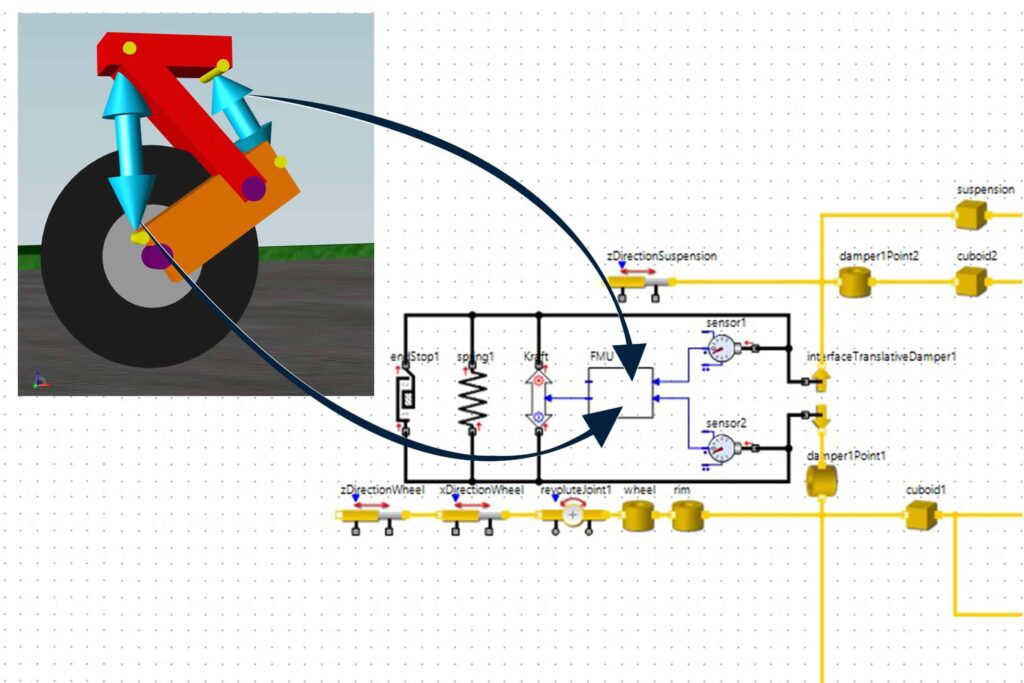
Is it not possible to save on these staff costs? After all, there will be more and more ‘digital natives’ among engineers in the future.
“Yes and no. It is true that digitalisation is increasing and we can arrange a lot online. But at the same time, customer issues are becoming more complex, requiring more ‘engineering power’. We can often answer standard questions digitally, but with customisation it is often too complicated, especially with special machines. Our damping solutions are often found in projects around renewable energy, such as floating power generators, wind turbines and so-called solar trackers. Here, we often use specially adapted dampers, developed on the basis of simulations and tailored to ambient conditions. Essential criteria are high mechanical load capacity, corrosion resistance and long service life - something ACE is known for.”
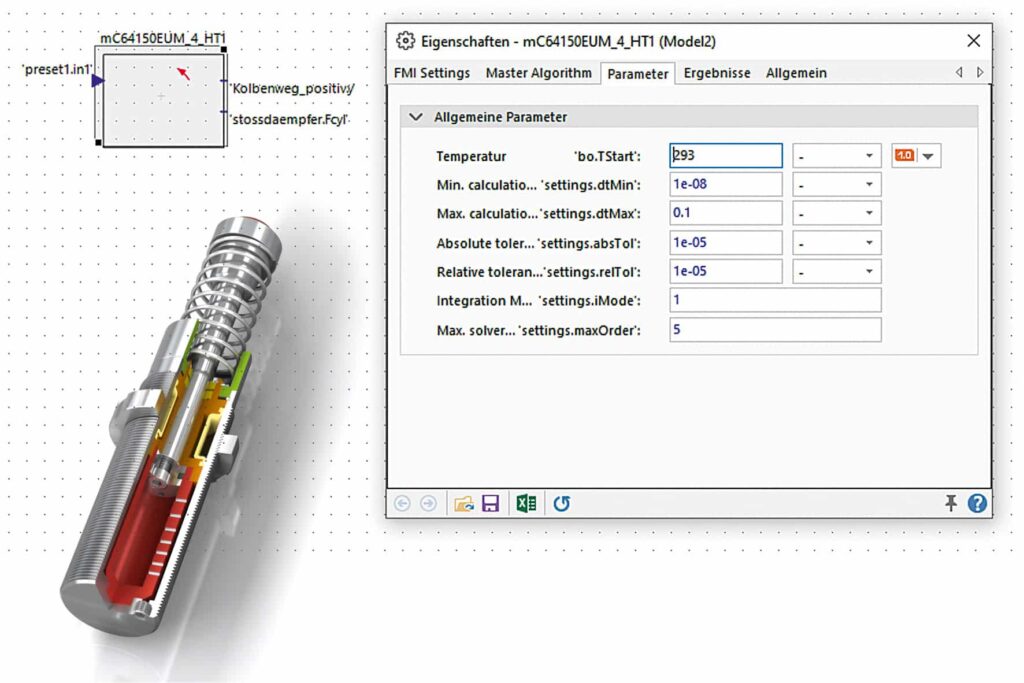
Can you elaborate on that simulation-based development without giving away any trade secrets?
“(Laughs) No way, this is state-of-the-art among industry leaders these days. What sets us apart is that our customers and we benefit from the many projects we are involved in. For example, thanks to intensive cooperation with our customers, new products in the form of small series have been developed on several occasions. For example, we have adapted standard dampers to specific applications - for example, ten unique small impact dampers in a handling system at a chip manufacturer. There, three precision axes had to be protected against calamities. Together with the customer, we determined the suitable damper for each axis, which had to meet exact specifications. In addition, a maximum reaction force in case of a crash had to be taken into account. Based on all specifications, we simulated the drilling pattern of the eligible small impact absorbers. In doing so, we succeeded, initially on the PC, in decelerating the energy and speed evenly over the entire stroke length and significantly reducing the maximum reaction force. In a third step, we optimised the standard dampers by adjusting them based on the simulation. This required tests on a purpose-built test rig with high-end axles and sensors. These simulations enabled us to be the first manufacturer of industrial shock absorbers to offer data from digital twins for integration into virtual models.”
Can you give us a preview of the latest innovations?
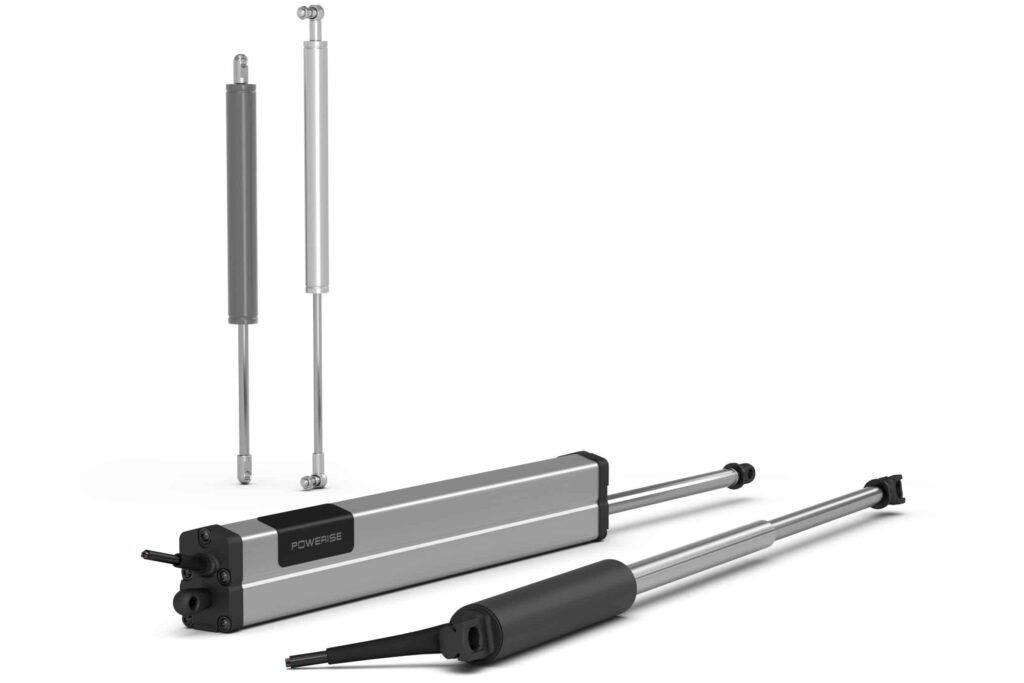
“Just launched are our Industrial POWERISE®, a new class of electromechanical drives for industry. Available with spindle pitch between 2 mm and 25 mm, they can lift, lower and position parts at the touch of a button. With forces between 250 N and 4,000 N and stroke lengths from 50 mm to 350 mm, they are ideal for automatic movement of valves, hoods, doors or gates. The special feature is that customers can also combine them in small quantities with our gas pressure and gas pull spring products from the ACE-NEWTONLINE series. Working more ergonomically and safely at the touch of a button: that is attractive for both new and existing structures. An example is the use on 45 kg heavy hoods of machine tools of a customer from Sittard. He is very satisfied with the greater ease of operation of the machines thanks to Industrial POWERISE®.”