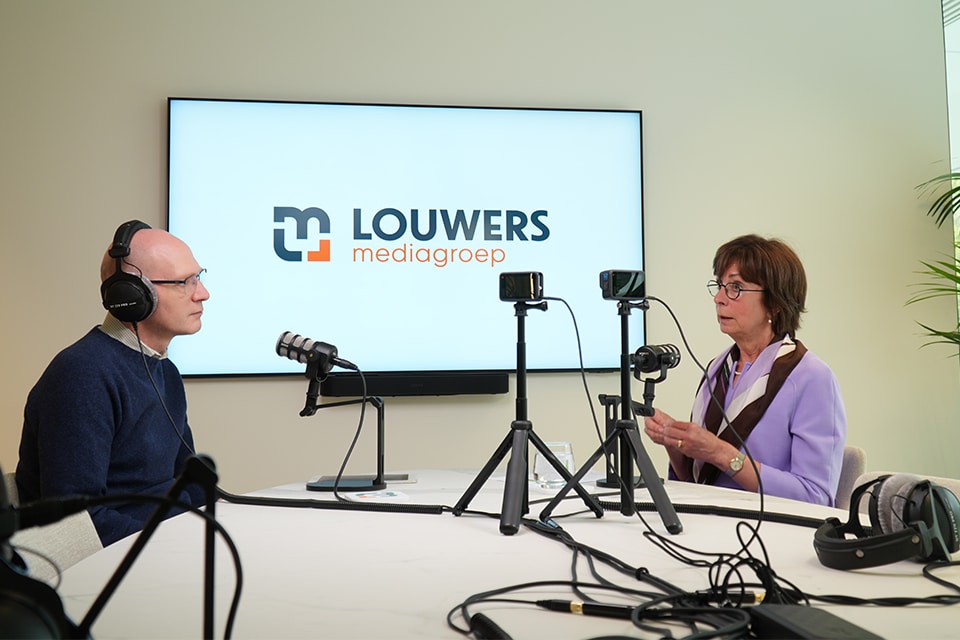
[00:02] Introducing the podcast series on energy transition
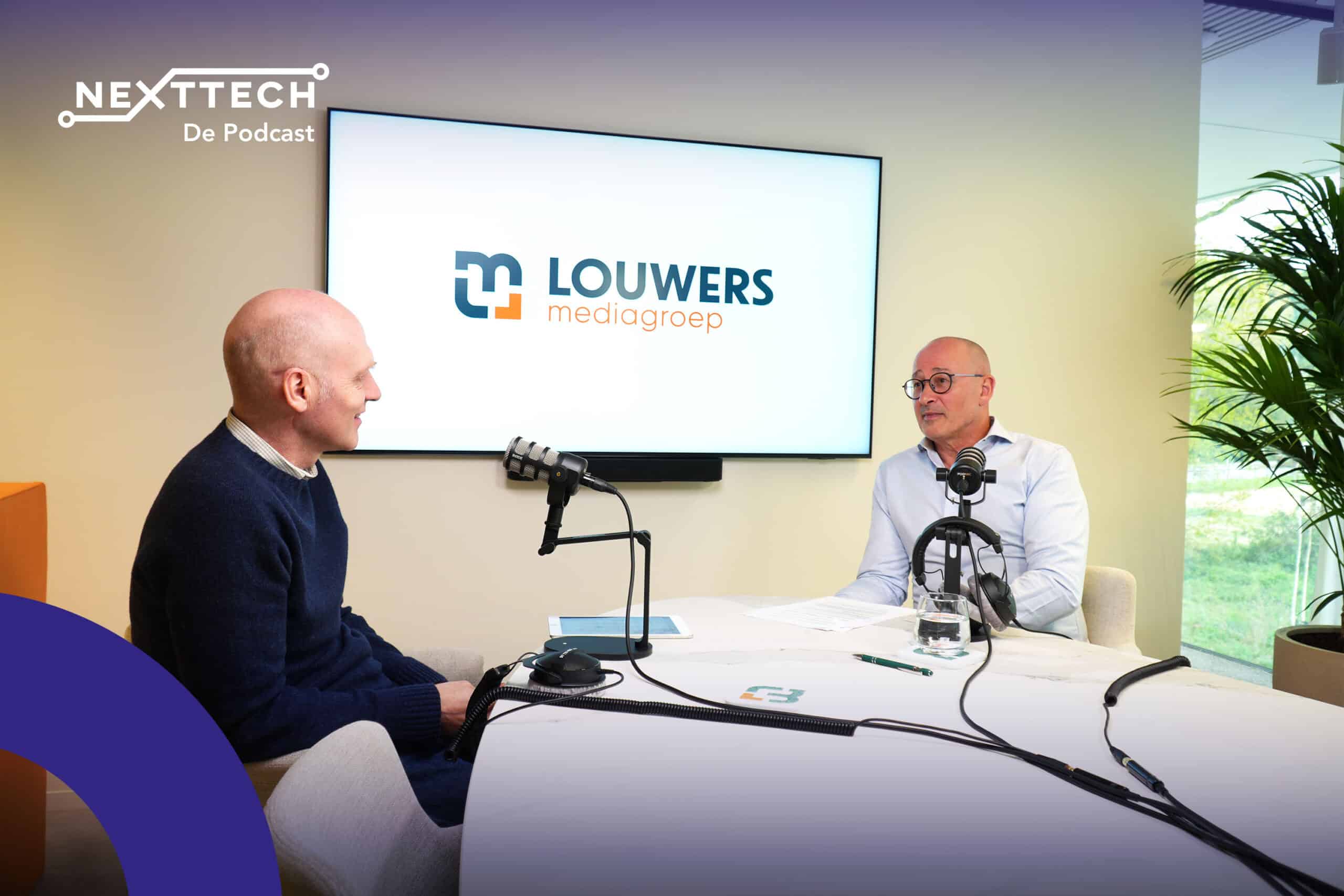
Björn Crul: Welcome to this podcast series on the energy transition and the evolution towards smart and sustainable buildings. In three episodes, we take a closer look at the big changes in our energy consumption and what the impact is for building professionals and installers. In this first episode, we look at how far along the energy transition is, which technologies are making a difference and what this means concretely for professionals. My name is Björn Crul, my guest today is Hilde Vandenberghe from Cebeo, Belgium's largest distributor of electrical equipment. Hilde, welcome. Energy is obviously a hot topic. When we talk about the energy transition today, what has fundamentally changed compared to five or 10 years ago?
Hilde Vandenberghe: A lot has changed and fortunately a lot has changed. But it is still an energy transition. A transition means a transition from one state to another. And that can happen in a slow way. A few years back, the government also saw, the world saw, that something had to change. And the policymakers thought: how are we going to support people in this? Then they brought a support campaign for solar panels. Because that's where it all started. That solar panels did not provide an energy transition, but they did provide a payback model, an earning model for people. And surely this is a bit different today.
[01:34] Influence of geopolitics and electrification
Björn Crul: Yes, also with everything that is happening geopolitically now and suddenly very sharply rising energy prices, does that change awareness?
Hilde Vandenberghe: Indeed, geopolitics plays a very important role. Why? Because the basis of our energy is changing. We are still used to heating with gas, even fuel oil. Now that we notice that we have less access to that, the realisation begins: okay, maybe we should look at that electrification, that change after all.
Björn Crul: Yes, as you say, electrification, making more use also of renewable energy. But why is it strategically and socially a necessity as well?
Hilde Vandenberghe: Because we have to do it for our world. It was twenty years ago, in 2006, that Al Gore released his An Inconvenient Truth. Twenty years ago already. Back then, the world actually knew that we had to do something to save that world, to also have a world for our grandchildren. I am about to become a grandmother. Now I realise: those children are really going to need it. So we notice, something has to change, but it has to be in a sustainable way. So it's not just just energy, but everything around that. It's also about waste, awareness, the way we deal with it. So sustainability is also a very important factor.
[03:01] Impact on homes, buildings and installers
Björn Crul: We need to adapt to ensure that global warming stops. So what does such a shift mean concretely for homes and buildings and for the range you offer?
Hilde Vandenberghe: That's obviously a big change, because there are several factors that influence that global warming. But one of them is heating and everything that happens in a building. So we need to change the way we build. I think that is already happening, think about insulating and so on. There are also some obligations imposed. For example, new buildings, you're already going to have no more gas connection there. There you have to go to a heat pump, just because there is an obligation that you have to have an efficiency of 130%. So we have to move in that direction, but it has to be more than the have to. It also has to be feasible for people. So what are we seeing? Something is changing in the buildings. We have to adapt, we as wholesalers, but obviously our installer as well. Our installer also has to be able to offer a solution to people. So our offer is increasing. Not only everything that is electricity, but also heat.
[04:22] Solar panels, charging stations and home batteries
Björn Crul: You just said it, people are coming to realise that things have to change. Now we all know, those solar panels have long been in place, also because of those subsidies that have been there. But where are things today, for example, with charging stations, heat pumps, home batteries? Are residential customers already inclined to invest in them?
Hilde Vandenberghe: I'm convinced of that, because they find that solar panels are only, okay, that's actually the tip of the iceberg. Literally. That's what's going to capture that solar heat. But then what do we do with it? We can put it back on the grid as before, but then we indeed come to that social issue: can our grid handle that? Can the grid operator still process it? Because we are going to produce and use our own energy or feed it into the grid. So what do we notice? Okay, sticking it all on the grid is no longer possible. There are many of us who are going to produce our own, so the grid operator no longer has any influence on that either as it used to have when there was a power station. So people are starting to look: okay, if I become a producer myself, I want to use that myself. Okay, then a charging station, going to charge your car, can be important. A battery can be very important. Then you are going to say: okay, no consumption at night, but I am going to make sure there is enough in my battery. And by the morning, when we have another peak, okay, I'm going to make sure I can get my energy from there. And the last step, I already mentioned it, that is that heat. Which used to be fossil fuels, which are now also becoming electric.
[06:04] Energy management systems
Björn Crul: Yes, generating all that own energy and also being able to consume it, for example via charging stations and heat pumps, that's one thing, but how do you then ensure as a user that you get the highest return from that, that the right things happen at the right times?
Hilde Vandenberghe: That's a very important question and of course these are also the systems of the future. We obviously don't want to run out of electricity because we consume too much energy. But to manage all that, there is an energy management system that will manage all consumers and will look: okay, according to your profile, according to the profile of the user, what should I best switch on first? Am I best going to use my charging station first or am I better putting my energy into my battery? Or am I going to use the heat pump? You can also store heat in water. So this all needs to be managed through an energy management system.
[07:05] Training for installers
Björn Crul: Yes, all those energy management systems, that's a very interesting topic. In the next podcast with your colleague Henk, we will discuss that in more detail. Now, many professionals and installers realise that the energy transition and those new products are an opportunity for them. At the same time, it does become more complex for many people. You as Cebeo are going to play a role in this with a training course on Energy Advisors. What will this training entail?
Hilde Vandenberghe: Indeed. And it's not one training either. What do we do at Cebeo? Indeed, the complexity is increasing, also for us. We actually want to unburden our installer. Because what is important? The unburdening. Comfort. For the end customer, but also for the installer. But how can we guide that installer? So we also look at: what does the end customer want? We then think as an individual: what would we want and what questions should we ask our installer? And then we start looking: what type of installers do we have? You have electricians, where electricity is basically the basics. You have HVAC installers, where heating is the basics. You also have refrigeration technicians, where cooling is the basics. When you start looking at what those people need to actually answer that individual's question now if he wants to make his home so energy efficient.
Björn Crul: Because it actually all flows together.
Hilde Vandenberghe: Indeed. And so we look at those different sectors and we then try to guide people. So that Energy Advisor is actually a series of modules tailored to the knowledge of that installer at that time. So suppose, he already has knowledge of electricity, okay, then energy management systems are going to be much easier. Is it someone who is used to heating, gas wall boilers, yes, then he is going to have to look: okay, maybe he needs basic electricity for heating and then to energy management systems. As an example, I give that. An electrician can say: okay, I am now dealing with heating, so also with water, maybe I need to take a hydraulics module first. So it's really tailored to the needs of an installer, with a view of exactly what that individual can ask me to do.
[09:35] Regulation, cybersecurity and AI
Björn Crul: Yes, and that's actually not all, because a lot is still evolving, both in terms of technology and regulations. What do electrical engineering professionals all have to take into account in the near future?
Hilde Vandenberghe: Regulation is indeed very important. That also gives a certain complexity, but also gives a certain standardisation, which is also becoming more and more important. Think for example of the AFIR legislation of all things charging stations. Which is actually going to impose a standard of how a car and a charging station are going to communicate. As it becomes digital, it becomes increasingly difficult to start looking at, for example, cybersecurity. How secure is my connection between my charging station and my car? You're going to fast charge in a parking lot somewhere abroad, is that communication secure? And that's that AFIR legislation. So it's getting more complex, but it's also getting better. It's being supported. Another thing that the installer will definitely also take into account is with AI, i.e. artificial intelligence. Because that will help tailor all those systems, to control the consumption of a home, to the individual.
[10:53] Cebeo Technology at the Heysel
Björn Crul: Hilde, at the beginning of June there will then be the Cebeo Technology fair at the Heysel in Brussels. What will we all discover there around energy transition? That will be a central topic of the fair, I assume.
Hilde Vandenberghe: Of course. It is very important to show: how to do it? So we have our suppliers who will be there, each with their product range. But bringing all those suppliers and their products together, that's the challenge. And for that we have our central stand, our Green & Smart stand, where we actually really show a total solution for a home. Not only for a residential property, but also for buildings. Because commercial buildings are also required through legislation, depending on consumption. What about that? So we show the total solution, even visually, with LED and so on. So I would say: if you come to Technology and you come to the central stand, our specialists will be there and they will also be able to explain how exactly it works, all that energy consumption and the management underneath. Appointment from 2 to 4 June at the Heysel in Brussels for Cebeo Technology.
[12:07] Delivery closure
Björn Crul: Hilde Vandenberghe, thank you for this conversation. So in the next episode of this series, we will zoom in further on the importance of energy management and energy management systems. Happy to see you next time.