nexttech.be
en

The knowledge platform for technology, innovation and digital transformation
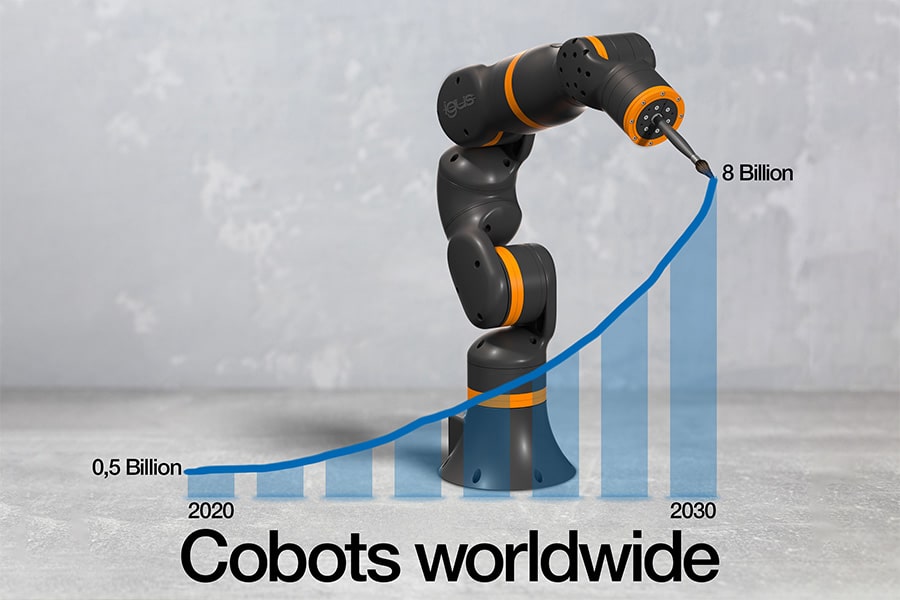
Accountants, journalists and even IT specialists are surprised when they realise just how rapidly automation and artificial intelligence are developing. For industry – particularly larger companies – this opens up new opportunities on the path towards so-called ‘smart factories’. Traditional small and medium-sized enterprises (SMEs), however, are at risk of falling behind, as they are often not ready to take the plunge. With low-cost automation solutions, they can still invest in automation and robotisation, ensuring they do not miss the boat. The German company igus is responding to this need by developing and manufacturing robots at competitive prices.
According to the International Federation of Robotics (IFR), an increasing number of robots are being deployed for a wide variety of applications in industrial environments. In 2022, a new global record of 3.5 million robots – with a total value of 15.7 billion euros – was recorded. However, the world is still a long way from experiencing rapid growth. This is evident from a study by management consultancy McKinsey, carried out to coincide with the latest edition of the well-known automatica trade fair. In the current manufacturing landscape, the authors of this study identify a small number of factories that are setting new standards in automation – from artificial intelligence to digital twins and self-learning robots. Artificial intelligence (AI) in particular was one of the key themes at the trade fair. Rapid developments in this field are heralding a new era of automation. However, the research does indicate that most factories are still a long way from the levels of digitalisation and automation that are possible today. They run the risk of falling behind in an industrial environment characterised by rapid change and development.
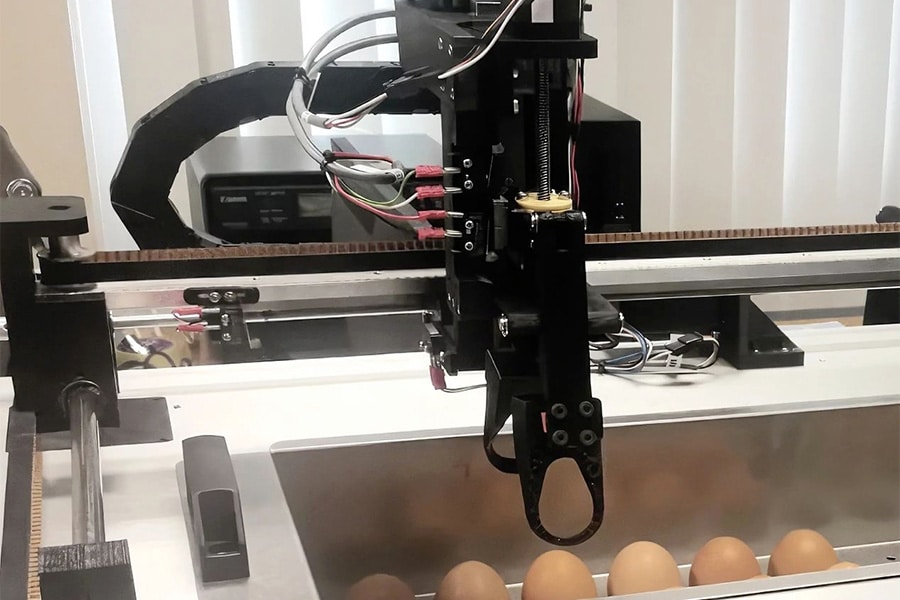
It is not only larger companies with substantial budgets that can play a part in the future of AI automation. Small and medium-sized enterprises, which until now have not had the opportunity to invest in such solutions, are now being given a chance. Low-cost automation – automation products that are not so expensive or demanding – offers the solution, and this market segment therefore has significant growth potential. The number of manufacturers and distributors of such products has only increased in recent years. They offer robots at a price significantly lower than that of traditional industrial robots. They make use of online shops, where businesses can configure their robot with just a few clicks, without the need for expensive integrators.
Thanks to so-called ‘no-code’ technology, these robots can even be controlled just as easily as a computer game. And that is important, because figures from the IFR showed that the programming and integration of a robotic application currently account for up to 70% of the total costs.

The German company igus GmbH is one of the key players in the low-cost automation market. This family-run business, headquartered in Cologne, has long specialised in the development and production of motion plastics – high-quality, lubricant-free polymers that improve performance and reduce costs in a wide variety of applications where things move. igus employs 4,600 people worldwide and is represented in 31 countries. In 2022, the company achieved a turnover of 1.15 billion euros. To drive further growth, several start-ups have been established within the company in recent years, focusing on areas such as 3D printing, robotic drives and smart plastics for Industry 4.0.
The RBTX platform for Lean Robotics is another such initiative. Thanks to igus’s robots, SMEs can make the transition to automation easily and without a major investment. For example, you can buy the ReBeL in Germany for as little as 4,970 euros. This robot is made entirely from high-quality plastic and is ideally suited for tasks such as loading and unloading machines.
With RBTX.com, igus offers companies a platform that helps them find a suitable solution for every application and budget. This online tool brings together manufacturers and users of low-cost robotics. More than a hundred partners now offer their products on the platform. Users can easily add robots, machine frames,
combine grippers, conveyor belts and so on, and even test movements. In future, these functions will also be available in virtual reality, as igus has already developed a solution for this with iguverse. No programming knowledge is required.
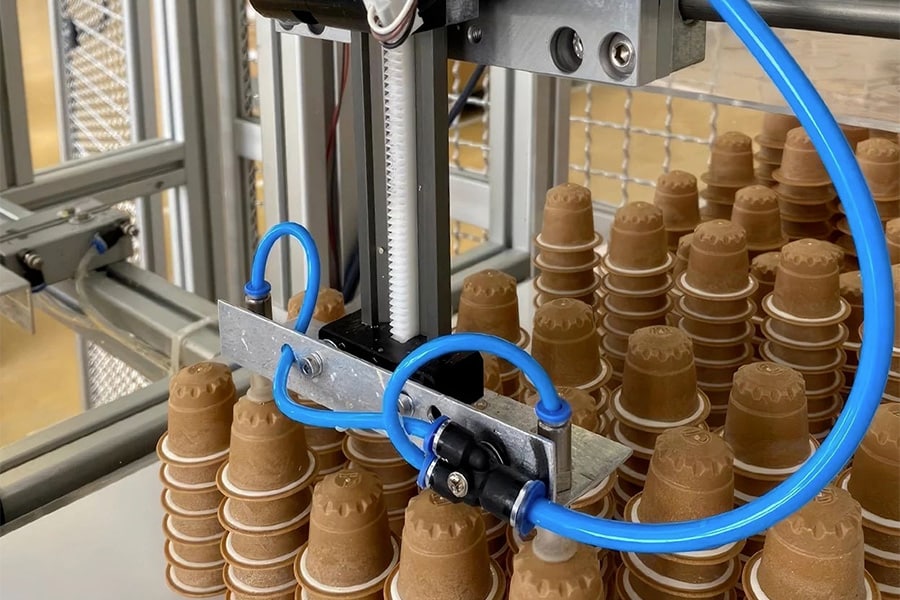
“To date, several thousand SMEs from countries all over the world have used RBTX.com to develop and test automation solutions. These users come from a wide variety of sectors – ranging from an earthworm farm to a baker looking to package doughnuts,” says Alexander Mühlens, head of the Low Cost Automation Business Unit at igus. “For 95%, out of the more than 400 solutions, the investment was less than 12,000 euros. Interest in RBTX has only grown since its launch. After all, it offers more cost-effective solutions than other well-known similar platforms. We have now provided consultancy for over 2,500 projects and have already shipped several thousand robots to customers.”
“Of course, you have to bear in mind that such cheaper robots are not suitable for every automation task. For applications where heavy loads need to be moved or where extreme precision is required, they are not an option and other solutions are needed. Nevertheless, a large number of tasks on the shop floor can now be automated in this cost-effective way. And this is happening in both SMEs and larger companies. After all, they too are looking to invest as efficiently as possible and keep the payback period as short as possible. The advantage of RBTX is that users can find low-cost robot components from various manufacturers in one place and through a single point of contact – and always with a price and compatibility guarantee. Suppliers have the opportunity to tap into new target groups and sales channels for their products. It is a win-win situation for everyone involved.” ■